
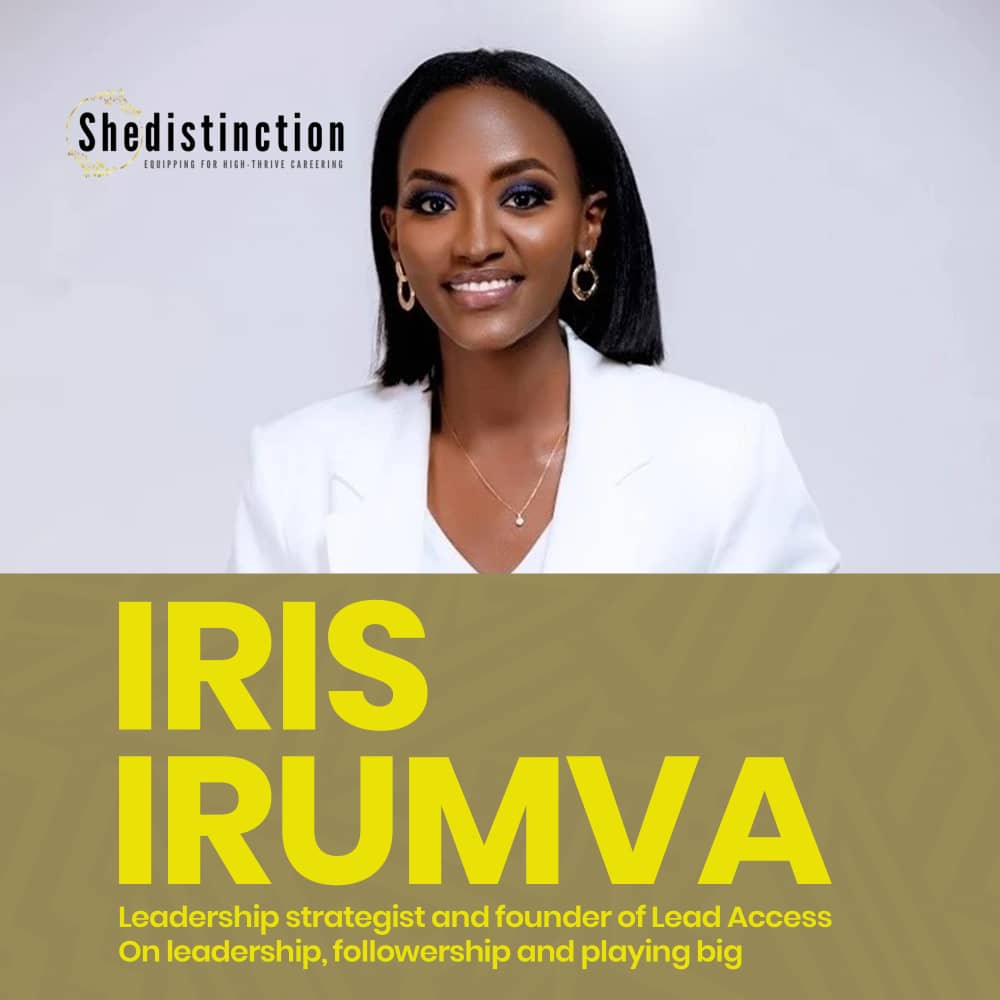
‘’Many leaders are still managing for output, not engagement. We chase KPIs without understanding the emotional contract people have with their work. We need to stop seeing leadership as directional and start seeing it as relational, a shared space where power is not held, but circulated.’’
Iris Irumva is a leadership strategist, coach, and founder of Lead Access and the Women in Leadership Summit. With more than 15 years of experience in leadership development across Africa, she equips individuals and organisations to lead with clarity, confidence, and courage. Iris is the author of “Lead Your Way Up”, a powerful guide on navigating failure and owning one’s leadership journey. She is passionate about empowering women to unlearn limits, claim space, and lead authentically. Through her programs like “MentorHer” and “WeLink”, Iris creates transformative spaces where women grow, rise, and thrive at work and in business. She is a proud mother of two sons.
Leadership has always been challenging and more so now. What one competency would you say is always an asset in leadership irrespective of context, issue or team and why?
Self-awareness is the one competency that consistently sets great leaders apart. It allows you to recognize your triggers, biases, and blind spots while staying open to feedback. In any context, whether you’re leading in a crisis, building a team, or managing change, if you lack self-awareness, your decisions and communication will fall short. But with self-awareness, you lead from a place of emotional intelligence, humility, and growth.
We tend to focus on leaders but leadership implies there’s followership too. What views of followers deserve more attention towards promoting more effectively led environments?
We rarely ask followers what they need in order to lead from where they are. We assume followership is passive, when in fact, great followers are active contributors, culture builders, and even silent leaders. What deserves more attention is their capacity and desire for agency. Many followers are disengaged not because they lack motivation, but because their environments suppress initiative. To create more effectively led environments, we need to stop seeing leadership as directional and start seeing it as relational, a shared space where power is not held, but circulated. When followers feel empowered to challenge, co-create, and take ownership, leadership becomes a collective force, not a solo act.
Employee engagement has been low for decades. Why are leaders struggling to get this right and what accountability mechanisms might shift and improve this?
Many leaders are still managing for output, not engagement. We chase KPIs without understanding the emotional contract people have with their work. The shift happens when leaders are held accountable not just for what their teams deliver, but how they feel while delivering it. Embedding engagement metrics into performance reviews, for both leaders and teams, could drive a cultural change where people matter as much as results. Engagement isn’t a personality issue; it’s a design failure.
Women’s challenges at work are complex and well known. What challenge would you say is still unseen/ignored and what needs to be done to address it?
One challenge we rarely talk about is role fatigue, the invisible pressure women face from performing multiple identities at work: being capable but not intimidating, ambitious but not aggressive, nurturing but not weak. It’s exhausting. This often leads to self-censorship, over-editing, and exclusion from informal spaces where decisions are made. To address this, we need to practice permission. Permission to take up space without apology. To join conversations even when we feel uncertain. To seek visibility without guilt. Because unlearning is just as critical as learning when it comes to leadership.
You indicate that your book ‘’Lead Your Way Up’’ is a source of hope to face failures with grace. Why did you choose this angle and what does ‘grace’ look like?
I chose that angle because failure is inevitable, but our response to it defines our journey. So many women internalize failure as a reflection of their worth. Grace is the space between falling and rising, where you learn, forgive yourself, and refuse to give up on your story. Grace looks like refusing shame, embracing the lesson, and showing up again, more grounded, not defeated.
One piece of advice you’ve given women that I found not so common was that women should filter advice. How do you filter advice yourself and what’s the most important piece of advice you’ve applied?
I filter advice by asking myself this simple question: Is this advice coming from fear or from freedom? Not all advice is wrong, but not all of it is right for your season, your values, or your vision. The most important advice I’ve ever applied was: “You don’t have to be ready to start, you just have to be willing.” That freed me from perfectionism and helped me build impact through action.
Another piece of advice you’ve given to women is to “play big.” What would Iris playing big in the next 12 months look like?
For me, playing big means scaling systems that unlock access for thousands, not just influencing one room. Over the next 12 months, it looks like expanding the Lead Access platform across Africa, deepening partnerships that place young women in meaningful work, and growing spaces where women don’t just lead, they thrive unapologetically. Playing big is no longer about visibility for me, it’s about multiplying value for others.
For more interviews and resources visit www.shedistinction.com